Internal automation tools
The spreadsheet, the re-keyed form, the weekly report someone builds by hand. Now worth automating.
Why now
We are living through one of the most important technological inflection points in history. Things that were impossible to build a few years ago are practical today, and the window to get ahead of it will not stay open forever.
The moment we're in
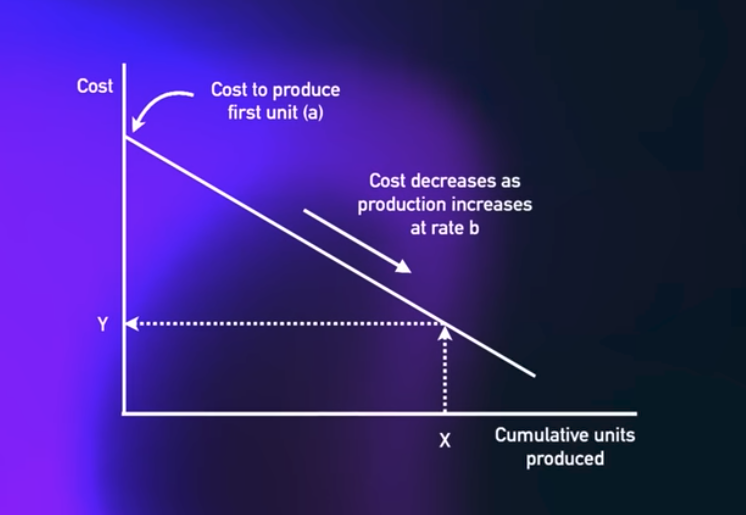
Wright's Law says a technology improves as production scales: every doubling of output brings a predictable drop in cost and a predictable gain in capability. Computing has followed that curve for decades, and AI is the newest multiplier on top of it. The result is not a little faster each year. It is a step change.
Projects that used to take five to eight months can now be done in about five weeks. That is the 10x moment.
What this means for your business
Custom software used to be expensive, slow and risky. Today it means faster iteration, lower cost and more room to experiment.
The spreadsheet, the re-keyed form, the weekly report someone builds by hand. Now worth automating.
A real application for your customers, at a cost that used to buy a brochure site.
Offers, loyalty, wallets and notifications in your customers' pockets, like YouSave.
Devices, kiosks and hardware that talk to your systems, now within reach of a small team.
AI: threat or opportunity
Many fear AI will replace jobs. History shows technology creates more opportunity than it removes. AI amplifies the businesses that use it well.
What most people get wrong
Relying on AI without understanding what it produces, or stacking no-code tools without understanding the system underneath, leads to solutions that are fragile, insecure and impossible to scale. It works in the demo. It breaks on the first real month.
Why we're different
Decades of programming experience and a deep understanding of systems and architecture. AI is a tool in our hands, not a replacement for them. That is how you get development that is 10x faster and reliable, scalable, and built correctly from day one.
The opportunity
This window will not last forever. Early adopters gain massive advantages. Late adopters pay more to catch up.
Ideas that were shelved as "too complex" or "too expensive" deserve a second look under the new math. The constraint that killed them has moved.